
ABC Leisure Group Limited
Registered in England, Company number 2860394
Registered address:
Alvechurch Marina
Scarfield Wharf
Alvechurch
Worcestershire
B48 7SQ

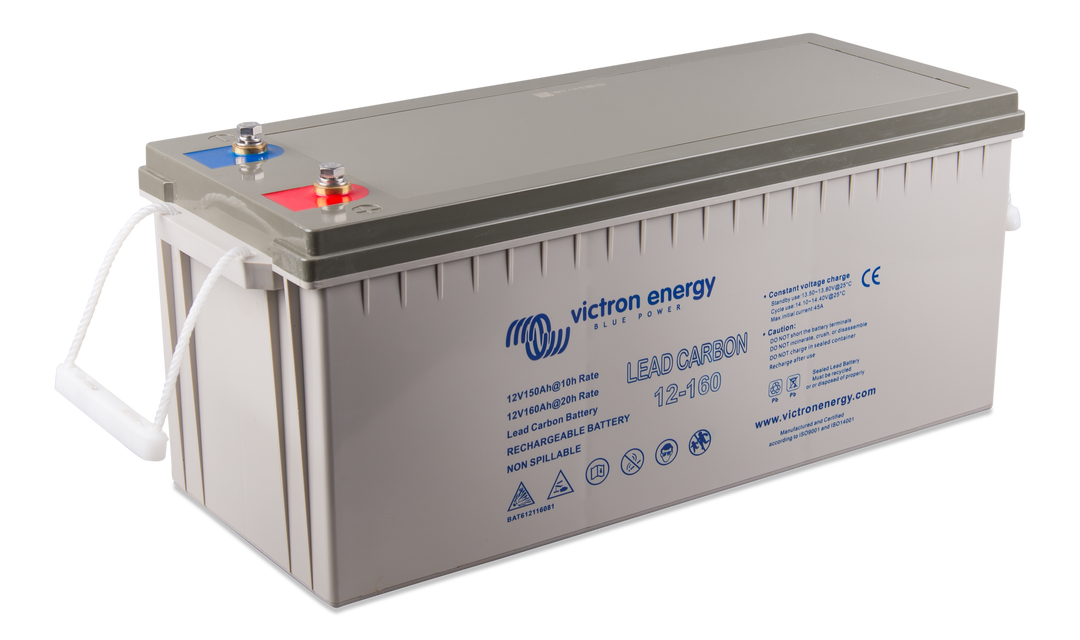
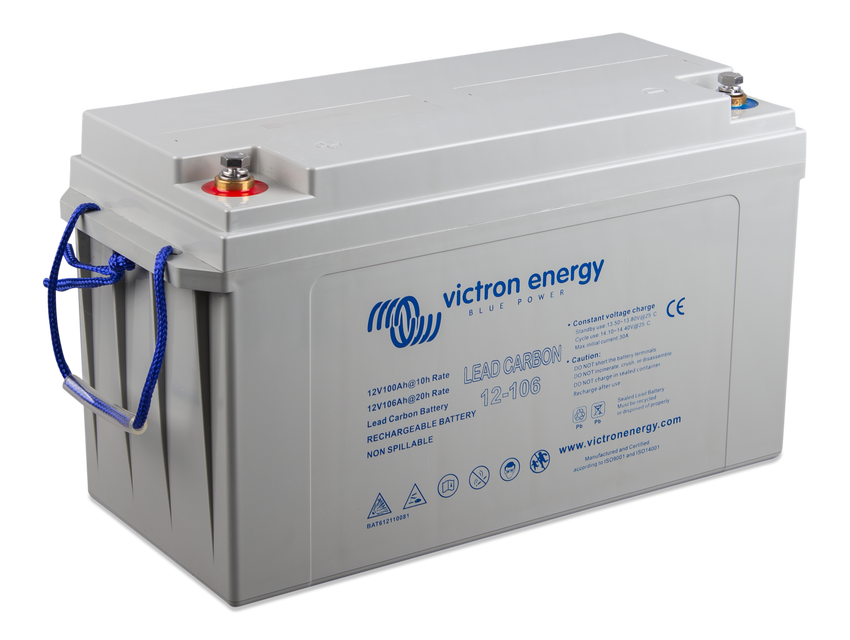
Lead carbon batteries are an advanced form of lead-acid battery where carbon is added to the negative plate. This carbon dramatically improves performance in partial-state-of-charge use, extends cycle life by around 3-4 times compared to standard lead-acid batteries and enables faster, more efficient charging, especially in solar and off-grid applications.
Lead Carbon batteries are best suited for off-grid solar users, marine applications and anyone needing deep-cycle reliability without maintenance. They handle frequent deep discharges better than flooded batteries, don't leak or spill, and work brilliantly in a wide range of temperatures where other batteries struggle.
If you're running an off-grid/mobile system, lead carbon batteries are ideal. They're built to handle the daily grind of deep cycling without failing after a year. These batteries can give 5-8 years of solid service, unlike conventional batteries which need replacing much more frequently.
Longer lifespan – more cycles and fewer replacements mean less money spent over the years.
Zero maintenance - lead carbon batteries are sealed and sorted. Mount them, connect them, and forget about them until they need replacing years down the line.
These batteries charge faster than standard lead-acid. Less downtime waiting for your battery bank to top up. Get back to full power quickly between cycles.
Deep discharge recovery - drained flat? Lead carbon batteries bounce back better than any other lead-acid type. They're forgiving when charging gets irregular.
Each battery type has its place. Here's how they stack up for real-world use.
Lead carbon batteries significantly outlast both gel and AGM in cycle life, often delivering three to four times more cycles than standard lead-acid types. They also charge much faster and handle partial state of charge without sulphation damage, making them perfect for daily cycling and inconsistent solar charging.
Gel batteries excel in difficult temperatures and spill-proof applications but charge slower.
AGM batteries are also spill proof and offer a budget-friendly middle ground with moderate cycling capability and vibration resistance.
While lead carbon batteries cost more upfront, those extra cycles mean fewer replacements over the years, lowering your cost per cycle significantly.
TOP
ABC Leisure Group Limited
Registered in England, Company number 2860394
Registered address:
Alvechurch Marina
Scarfield Wharf
Alvechurch
Worcestershire
B48 7SQ
